Smart stores & cabinets

AI Smart Stores and Smart Cabinets for Edmonton Properties

Tap your card to unlock, take what you want, close the door. Sensors and AI recognize what left the shelf and charge only for that. It is the convenience of a store in the footprint of a cooler.

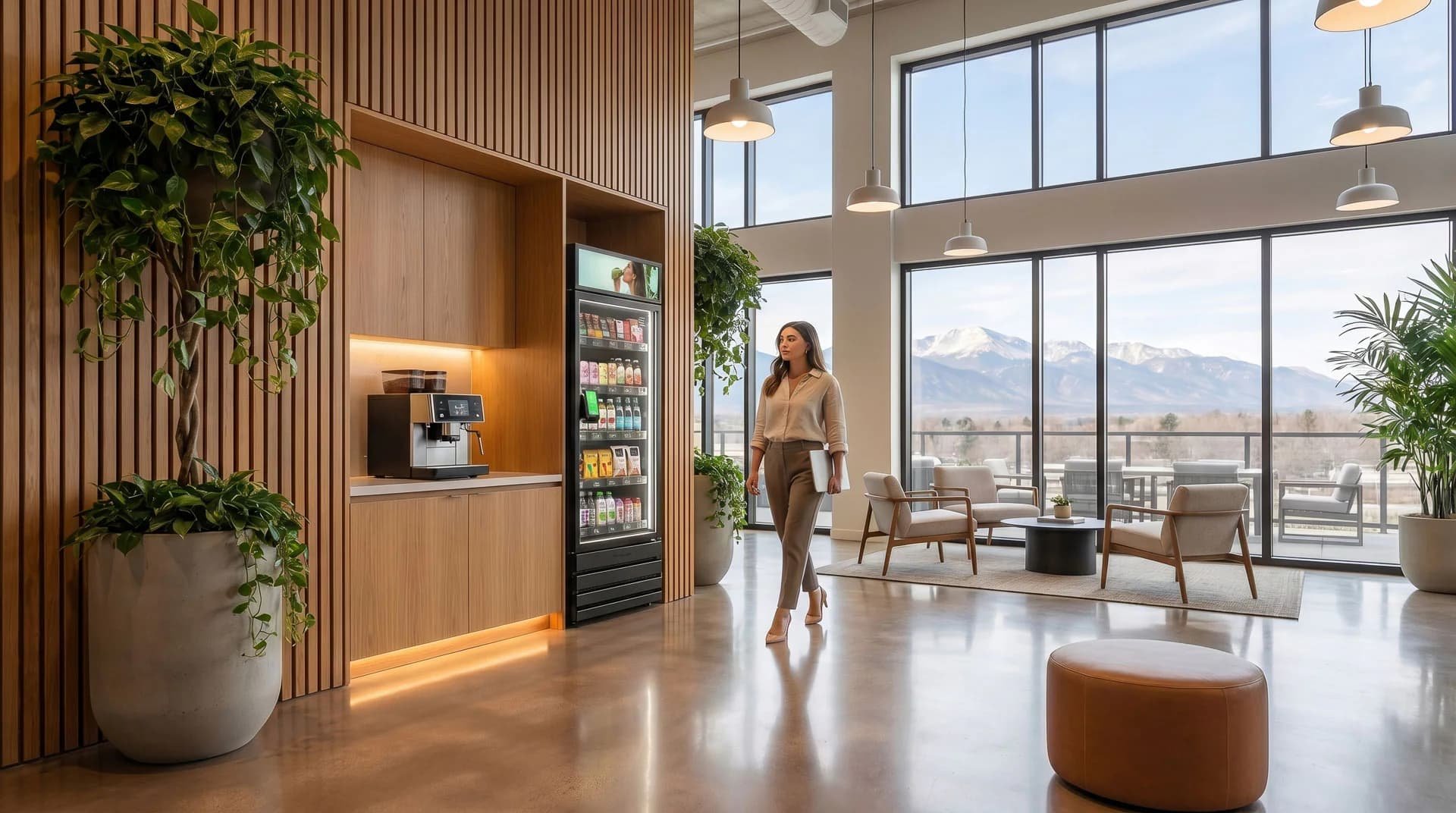
AI smart store cabinet being opened with a tap of a card

What you get

01

Grab-and-go checkout

No selection codes, no keypad. Unlock, take items, close — the charge is calculated automatically.

02

Fits where a market cannot

A smart cabinet needs only a few feet of wall, so smaller offices and lobbies still get an open-shelf experience.

03

Fresh and chilled friendly

Sandwiches, salads, bowls, dairy, and cold drinks sit on open shelves instead of behind a vend mechanism.

04

Item-level data

Every pick is recorded in real time, so the product mix and restocking schedule follow actual demand.

05

Loss protection built in

Payment is authorized before the door unlocks, and sensors reconcile every transaction.

06

Zero cost, fully managed

VendAI owns the hardware and handles installation, stocking, rotation, cleaning, and support.

Smart store vs. vending machine vs. micro market

  • Vending machine: smallest footprint and lowest traffic requirement, packaged goods only.
  • Smart store / smart cabinet: a few feet of wall, open shelves, fresh and chilled items, tap-to-open checkout.
  • Micro market: 100–400 sq ft, the widest assortment, best for 75+ people on site or heavy resident traffic.
  • Sites often start with a smart cabinet and expand into a micro market as usage grows.
  • We recommend the format your traffic supports rather than the largest one that fits.

Best fit

  • Offices and coworking floors
  • Apartment, condo, and hotel lobbies
  • Clinics, gyms, and amenity rooms
  • Sites wanting fresh food without a full market

A free site assessment covers traffic, space, visibility, and audience, then recommends the machine, cabinet, smart store, or micro market that fits.

Book a Free Site Assessment

How a smart store works and what it needs

The transaction, step by step

A customer taps a card, Apple Pay, or Google Pay on the reader. A pre-authorization hold is placed, the door releases, and the person takes whatever they want — one item or six. Inward-facing sensors and shelf detection track each removal, the door closes, and the hold is settled for exactly what left the shelves. There is no selection code, no keypad, and no chance of paying for an item that gets stuck on a coil, which is the single biggest complaint people have about traditional machines.

Footprint, power, and placement

A slim single-door cabinet needs about two and a half to three feet of wall, roughly 30 inches of clearance for the door, and one standard 15-amp outlet. A double-wide store runs five to six feet and does better on its own circuit. Placement matters more than size: the unit needs to sit where people already walk — a lobby sightline, the corridor between reception and the elevator, the wall a lunchroom faces — because a smart store behind a door people do not open gets used a fraction as much.

What it carries, and why fresh changes behaviour

A typical cabinet holds 60 to 140 items across open refrigerated shelves: sandwiches, wraps, salads, bowls, yogurt, cheese, fruit, protein items, cold brew, sparkling water, energy drinks, and full-size snacks. Because nothing has to survive a vend mechanism, fresh food is viable in a footprint where a machine could only offer packaged goods — and fresh is what turns a once-a-week purchase into a daily one.

Loss, disputes, and what your team never has to handle

Payment authorization before entry removes most of the risk that makes unattended retail uncomfortable. Sensors reconcile every open-and-close, and any discrepancy is our problem to resolve. Refund requests, card disputes, and support calls come to VendAI through the contact on the unit — your reception desk is never in the middle of a charge argument, which is the practical reason clinics and residential buildings prefer this format.

Where a smart store is the wrong answer

We will say so when it is. Sites with 75 or more people on site daily usually outgrow a cabinet quickly and are better served by a micro market with real shelf depth. Very heavy industrial rooms sometimes need the durability and capacity of a reinforced machine bank instead. And a site with no reliable network and no way to add one is a poor fit, since the unit depends on a connection for pricing and settlement.

Comparing formats before you decide? These pages go deeper: smart store vs. traditional vending, open-shelf micro markets, and AI vending machines.

Worked example

A 60-person Edmonton office floor

One tenant floor in a downtown tower, a shared kitchen with roughly four feet of free wall, and a landlord who did not want cash on site.

  • One double-wide glass-front smart store on a dedicated 15-amp circuit
  • About 120 items, half fresh: sandwiches, bowls, yogurt, fruit, cold brew, and full-size snacks
  • Placed on the wall facing the kitchen entrance so it is visible from the corridor
  • Tap-to-open with pre-authorization; no cash, no keypad, no coin service
  • Restocked twice a week, with the slowest ten items swapped out after the first month

Smart store questions

What people ask before putting one in a lobby.

How does a smart store know what I took?
Your card or phone authorizes before the door unlocks. Inward-facing sensors and weight or vision detection record each item as it leaves the shelf, the door closes, and the final charge is settled for exactly what you took.
How much space and power does a smart cabinet need?
A slim unit needs roughly two and a half to three feet of wall, clearance for the door swing, and one standard 15-amp outlet. A double-wide store needs about five to six feet and, ideally, its own circuit.
What happens if the internet drops?
Transactions are queued locally and reconciled when the connection returns, so the unit keeps serving people. Remote monitoring flags the outage to us, not to your front desk.
What if I am charged for something I did not take?
Refunds come to VendAI, not to your team. A support contact is printed on the unit, every transaction has an item-level record behind it, and we settle disputes directly with the customer.
Can a smart store hold fresh food?
Yes — that is one of its main advantages over a vending machine. Sandwiches, wraps, salads, bowls, yogurt, and dairy sit on open refrigerated shelves with no vend mechanism to damage them.
How small can a site be and still qualify?
Because the unit is cashless and remotely monitored, sites with roughly 25 to 30 regular users can usually be served, which is well below the threshold a traditional cash-handling machine route needs.

Free report

Request a Free Site Assessment

We’ll review your current vending or snack setup and deliver a simple one-page Smart Break Room Report:

  • Suggested vending machine, smart cabinet, smart store, or micro market based on traffic, space, visibility, and the audience using the area.
  • Recommended product mix (including healthy options) tailored by industry.
  • Suggested machine setup and placement for maximum usage.
  • Implementation plan and timeline if you decide to move forward.

No obligation, no pushy sales – just clear numbers and a plan so you know what smart vending can do for your workplace.

Get started

Ready to Modernize Your Vending?

Tell us about your property or workplace and we’ll map out a premium smart-store program that fits the space.